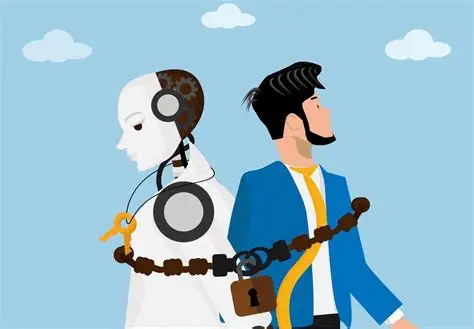
Is Overdependence on AI Safe? What You Should Know in 2026
Artificial intelligence has become part of everyday life for millions of people. You can use it to write a CV, understand a difficult subject, organise your expenses, develop a business idea, prepare for an interview or simply talk through a problem that has been bothering you.
The convenience is difficult to ignore. AI is available almost instantly, does not get tired of answering questions and does not appear to judge you. For some people, this makes it easier to ask an AI assistant about personal problems than to speak to another person.
But there is a difference between using AI frequently and becoming dependent on it.
Using AI every day is not automatically a problem. The concern begins when you stop trusting your own judgment, rely on AI for decisions you could make yourself, replace important human conversations with a chatbot or start sharing sensitive information simply because the technology makes it easy.
So, is overdependence on AI safe? Not always.
The important question is not how often you use AI, but how much control you have given it.
1. Using AI Every Day Does Not Mean You Are Dependent
There is nothing wrong with using AI regularly for ordinary tasks.
If you use it to improve your writing, summarise a long document, brainstorm business ideas or explain something you do not understand, you are simply using a tool to save time and improve your work.
The problem starts when you feel that you cannot complete ordinary tasks without asking AI first. If you cannot write without AI, make small decisions without AI or solve simple problems without AI, it may be time to examine how much control the technology has over your thinking.
AI should make you more capable, not make you feel incapable without it.
2. Do Not Let AI Make Important Decisions For You
AI can give an impressive answer within seconds, but it does not know everything about your life.
Imagine asking an AI whether you should leave your partner. You might explain what happened during an argument and receive a detailed response. However, the AI only knows what you have told it. It does not know the entire history of the relationship, what the other person experienced or what happened outside the information you provided.
The same applies to career and business decisions. Instead of asking, “Should I quit my job?” you can ask AI to help you identify the factors you should consider before quitting.
Instead of asking, “Should I start this business?” ask about customer demand, startup costs, competition, risks and questions you should investigate.
That small difference keeps the final decision in your hands.
3. Be Careful With Personal Information
Privacy is another major concern when people become too comfortable with AI.
People now share information about salaries, debts, relationships, employers, business plans and family problems with AI systems. Some even upload screenshots of private conversations, bank statements and workplace documents because they believe more information will produce a better answer.
Sometimes it will. But AI does not need every piece of information you have.
If you want help creating a budget, approximate figures for your income and expenses may be enough. You do not need to provide your bank account number, card details or other unnecessary identifying information.
The same principle applies to conversations. If you need help understanding an argument with your partner, you can describe what happened without uploading names, phone numbers, photographs and other private details.
Passwords, PINs, authentication codes and recovery phrases should never be casually entered into a general AI chatbot.
4. Think Carefully Before Uploading Work Documents
AI can make office work much easier. An employee might use it to summarise a report, rewrite an email or analyse information.
But a company document may contain confidential information about customers, employees, contracts, finances or business plans. Whether such information can be entered into an AI service depends on the employer’s policies and the particular service being used.
When possible, use an employer approved AI system or remove sensitive information before requesting assistance.
The same consideration applies when uploading someone else’s private messages. You are not only sharing your own information. You may also be sharing another person’s private communication without their knowledge.
5. Remember That AI Can Be Wrong
One of the easiest ways to become overly dependent on AI is to confuse confidence with accuracy.
An AI response can sound professional, logical and certain while still containing incorrect information. This matters much more when the subject involves money, health, law, employment or other decisions with serious consequences.
If AI gives you information about immigration requirements, check the relevant government authority. If it explains a medical problem, speak with an appropriate healthcare professional. If it provides legal information, check the applicable law or consult a qualified lawyer.
The higher the consequences of being wrong, the more important independent verification becomes.
For example, asking AI how to reduce your monthly expenses is very different from asking whether you should put all your savings into a particular investment.
The first is mainly an organisational question. The second could affect your financial future.
6. Do Not Replace Human Relationships With AI
AI is available at any time, which is one of its biggest advantages. You can ask it a question late at night when your friends and family are unavailable.
But convenience can become a problem if you gradually stop talking to real people because AI feels easier.
A trusted friend may understand your personality. A sibling may know your family history. An experienced colleague may understand your industry. A qualified professional may understand the practical consequences of a decision in a way a general AI system cannot.
AI can be part of the process without becoming the entire process.
This is particularly important with relationships. AI can help you organise your thoughts or consider different interpretations, but it should not become the final authority on whether you should forgive someone, leave a relationship, get married or make another major personal decision.
7. Keep Developing Your Own Skills
Overdependence can also affect learning.
If AI writes every essay, solves every problem, creates every presentation and answers every question, you may complete your work while developing fewer skills yourself.
A better approach is to attempt the task first. Write your own first draft, try the calculation, develop your argument or solve the problem before asking AI for help.
Then use AI to identify what you missed, explain difficult areas or suggest improvements.
This approach allows you to benefit from AI without handing over the learning process.
It is also worth spending some time without AI. Write something yourself before asking for editing. Read an article before requesting a summary. Make a small decision without consulting a chatbot.
These simple habits remind you that you can still think and work independently.
8. Use AI Differently Depending on the Stakes
Not every AI task requires the same level of caution.
For low stakes activities such as brainstorming, rewriting an email, organising a shopping list or explaining a general concept, AI can be a very useful assistant.
For medium stakes decisions such as career choices, business planning or expensive purchases, AI should be one source of information rather than the only source. Consider other perspectives and investigate the facts that matter.
For high stakes issues involving serious health concerns, legal rights, significant financial consequences or major personal decisions, AI can help you understand the subject and prepare questions. Human judgment and appropriate professional advice should remain central.
9. Ask AI To Challenge Your Thinking
One of the healthiest ways to use AI is to stop asking it to simply confirm what you already believe.
If you are considering a business idea, ask what could go wrong. Ask what assumptions you may be making and what information you are missing.
If you are considering a career change, ask AI to present the strongest arguments for and against the decision.
This turns AI into a thinking partner rather than an authority.
The same principle applies when you are upset. If you are angry with your partner, employer or friend, AI can help you organise your thoughts, but repeatedly asking it to confirm that your interpretation is correct may only reinforce what you already believe.
Sometimes the better next step is to calm down and have an honest conversation with the person involved.
10. Set Simple Rules For Your AI Use
You do not need complicated rules to use AI responsibly.
You can decide that you will not share passwords or authentication codes, will not casually upload confidential company information and will not provide unnecessary financial credentials.
You can also make it a rule that serious health, legal and financial decisions require information from appropriate human sources. Important relationship problems should also sometimes be discussed with trusted people rather than analysed endlessly by AI.
It is also worth checking the privacy and data controls of the AI services you use. Do not assume that every AI application handles information in exactly the same way.
If you regularly use unfamiliar AI websites, find out who operates the service and how information is handled before uploading sensitive documents.
The simplest privacy rule is often the most useful: if an AI system does not need a piece of information to answer your question, leave it out.
A Healthier Way to Use AI
There is no reason to avoid AI simply because overdependence is possible. The technology can be extremely useful for learning, brainstorming, writing, organising information, preparing for interviews, analysing non sensitive information and understanding difficult subjects.
The goal is to remain the person directing the process.
Use AI when it saves time or helps you understand something. Question its answers when the stakes are high. Protect information that does not need to be shared. Talk to real people when human experience matters.
Most importantly, continue developing your own ability to think, communicate, solve problems and make decisions without AI.
The smartest use of artificial intelligence may not be getting it to do everything for you. It may be knowing what to let AI do, what to verify yourself and what should remain in human hands.


